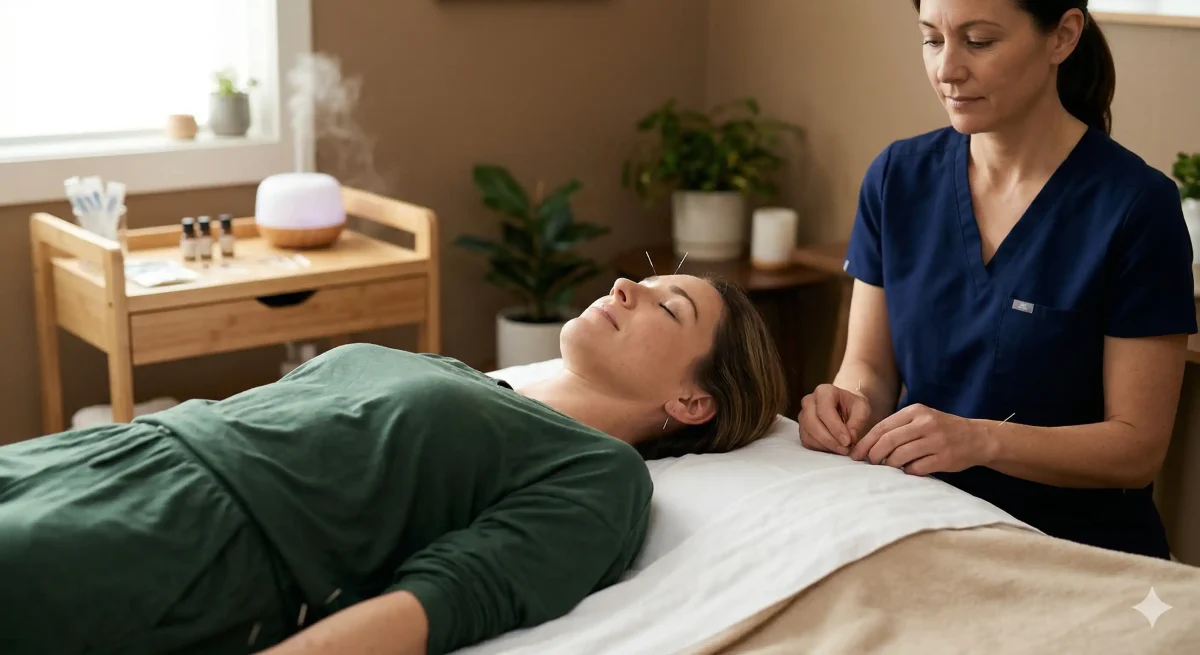
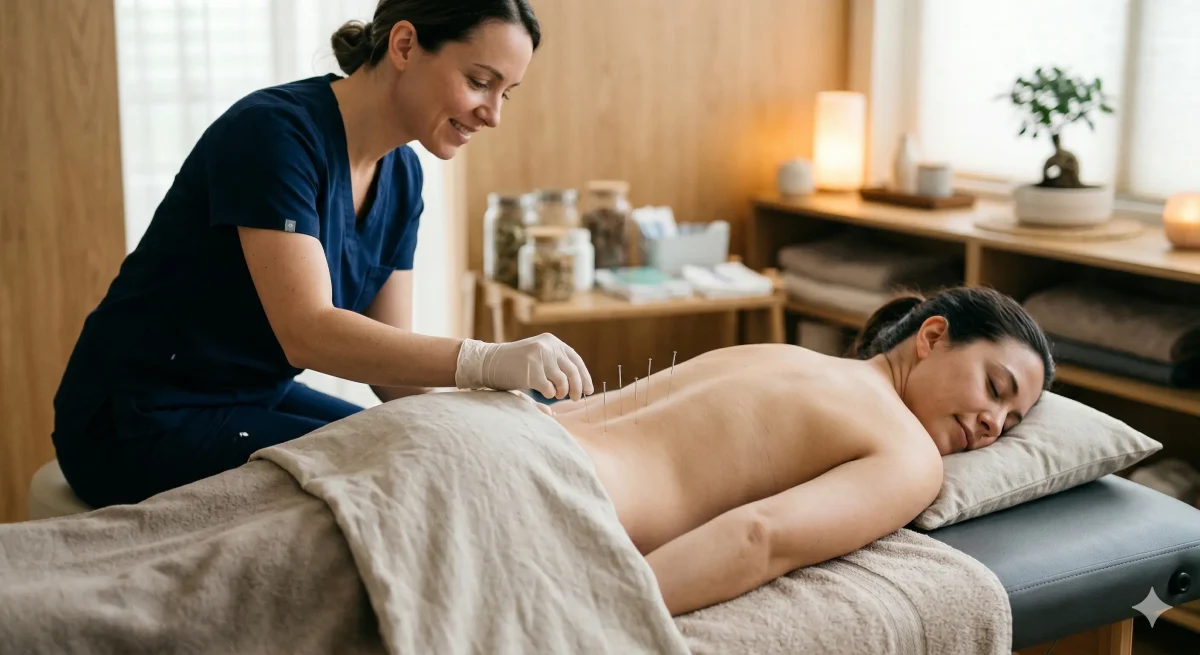
Most women who come to us have already read everything. The apps, the forums, the Reddit threads at 2am. They’ve tracked their cycles, cleaned up their diet, maybe sat through one consultation too many where someone handed them a pamphlet and said to reduce stress. And they’re still here, still looking for something that actually fits.
Fertility acupuncture isn’t a magic answer. We want to say that clearly, upfront. But for a lot of women — whether they’re trying naturally, going through IVF, or somewhere in between — it becomes a meaningful part of the picture. Not because it does one specific thing, but because it works on the whole system: hormones, circulation, nervous system, sleep, stress. All of it.
At VitaLife Wellness in Rockville, MD, this type of therapy is one of our most requested areas of care. Here’s what we actually tell patients when they come in asking about it.
What Is Fertility Acupuncture, Really?
In the most basic terms, fertility acupuncture is acupuncture that’s been focused on reproductive health. Very fine, sterile needles placed at specific body points — chosen based on your individual presentation, not a generic protocol.
Traditional Chinese medicine frames this through the lens of Qi and Blood moving through pathways in the body. If something’s blocked or out of balance, the theory goes, it shows up in symptoms: irregular cycles, poor sleep, digestive issues, and anxiety. Acupuncture works to restore that balance.
From a modern clinical standpoint, what we’re actually doing is influencing the nervous system, nudging the endocrine system, and improving blood flow—particularly to the uterus and ovaries. These aren’t small things when it comes to conception.
What it isn’t: a replacement for your OB-GYN, your reproductive endocrinologist, or whatever medical care you’re already receiving. It works best as a complement, not a substitute.
How Acupuncture May Support Women's Fertility
This is where patients usually want specifics. Fair enough. Here’s what the research and clinical practice actually point to:
Hormonal Regulation
The HPO axis — the feedback loop between your brain and your ovaries that governs ovulation, estrogen, and progesterone — is sensitive. Stress disrupts it. So does poor sleep, inflammation, and a handful of other factors. Acupuncture appears to help regulate this axis, which is why women with PCOS, irregular cycles, or anovulatory cycles often notice more predictable patterns after several weeks of consistent treatment.
Blood Flow to the Uterus
This one matters more than people realize. Endometrial lining quality—the environment an embryo has to implant in— depends heavily on circulation. Studies have suggested acupuncture can improve uterine blood flow, which may contribute to a thicker, more receptive lining. For IVF patients, especially, this concern is a real consideration.
Stress and the Nervous System
Cortisol is not your friend when you’re trying to conceive. Chronically elevated stress hormones disrupt ovulation, affect cervical mucus, and can interfere with implantation. Acupuncture shifts the body toward parasympathetic mode—the “rest and restore” state—and has been shown in research to reduce cortisol and anxiety. For women who’ve been deep in fertility treatment for months, that alone can be significant.
Whole-Body Assessment
One thing that distinguishes acupuncture from many fertility-focused interventions is that we’re not just looking at your cycle. We’re looking at how you sleep, how your digestion’s been, your energy, and your emotional state. Conception depends on the health of the whole system, not just one set of organs.
Who This Is Actually For
Fertility acupuncture isn’t one treatment that fits everyone. But some of the women who tend to benefit most include:
Women trying to conceive naturally: If you’ve been trying for several months without success and want to support your body in the process, acupuncture can be a low-risk, meaningful addition to your approach.
Women preparing for IVF or IUI: Many fertility clinics now actively support patients who want to incorporate acupuncture into their treatment cycle. It’s become fairly mainstream in the IVF world for good reason.
Women with irregular or absent cycles: When periods are inconsistent or missing, it often signals a hormonal pattern that acupuncture may help address over time.
Women with PCOS or endometriosis: Both conditions affect fertility, just differently. PCOS through hormonal disruption and irregular ovulation; endometriosis through inflammation and structural factors. Acupuncture doesn’t fix either condition, but it may help manage some of the patterns driving them.
Women navigating the emotional weight of fertility treatment: The anxiety, the grief, the exhaustion — these are real, and they affect the body. Acupuncture creates space for that, not just the physical side of things.
Women who want integrative care alongside medical treatment: If you want your care to look at the full picture, not just your labs and cycle days, acupuncture fits that approach.
Supporting IVF and IUI: What the Timing Looks Like
“Can fertility acupuncture help with IVF?” is probably the question we hear more than any other. For many women, the answer is yes — but only if they take the timing and frequency seriously.
Before Treatment Begins
If you’re planning an IVF or IUI cycle, starting acupuncture 8 to 12 weeks out is the goal. That preparation window gives your body time to regulate, reduce baseline stress, and potentially improve egg quality. The effects are cumulative. You don’t get that from starting the week before retrieval.
During Stimulation
Once you’re in the stimulation phase, sessions are typically coordinated around your monitoring appointments. The focus shifts to supporting your body’s response to medications, managing common side effects like bloating and fatigue, and keeping your nervous system as regulated as possible during a physically demanding stretch.
Around Embryo Transfer
This is the most well-studied window in acupuncture-fertility research. Several studies have looked at same-day fertility acupuncture—before and after transfer—with findings suggesting it may help by relaxing the uterus and reducing procedural anxiety. We try to coordinate directly with your clinic’s schedule to make this as seamless as possible.
During the Two-Week Wait
Nobody really talks about this part enough. The two-week wait is its own kind of hard. Acupuncture during this window isn’t about influencing outcomes — it’s about giving you somewhere to land while you wait.
When Should You Start?
Earlier is better, and three to six months out is the standard recommendation — enough time for the effects to build and for your cycle to respond. Egg follicles take about three months to mature, so treatments that start earlier have more opportunity to make a difference.
That said, starting later isn’t pointless. If you’re already mid-cycle, already in a protocol, or closer to your transfer date than you’d like, acupuncture can still offer real support. Don’t let the timing stop you from starting.
How Often?
For most women’s fertility acupuncture, weekly sessions are the starting point—at least for the first eight to twelve weeks. From there, your practitioner will adjust based on how your cycle is responding, where you are in your treatment plan, and what your schedule actually allows.
What Your First Visit at VitaLife Looks Like
Your first appointment is longer than a regular session. We spend time actually getting to know you — not just your cycle dates.
Full health and cycle history: We’ll go through your menstrual history, any diagnoses you’ve received, previous fertility treatments, sleep, digestion, stress levels, and anything else that gives us a full picture.
A personalized treatment plan: Based on that intake, we’ll put together a plan specific to your goals and constitution — not a generic fertility protocol.
Your first session: Treatment happens in a quiet, private room. Sessions typically run 45 to 60 minutes. Most patients leave feeling noticeably more relaxed than when they walked in.
A clear path forward: Before you leave, you’ll know what the next several weeks look like and what we’re working toward together.
Conclusion
Every fertility journey looks different. Some women come to VitaLife Wellness after months of trying to conceive naturally and feeling drained by cycle tracking, conflicting advice, and the pressure to keep doing more. Others are preparing for IVF or IUI and want care that feels calmer, more personal, and more supportive. Fertility acupuncture is not a guarantee, and it is not a replacement for medical fertility care. What it can offer is a supportive, integrative approach that may help women feel more balanced and cared for during conception or treatment.
For many women, that kind of whole-body support matters. Fertility care can feel clinical, stressful, and emotionally exhausting, especially when everything seems focused on timelines and outcomes. Acupuncture offers space to slow down, support the nervous system, and approach reproductive health more holistically. Research is still evolving, and results vary from person to person, but many women choose fertility acupuncture as part of a broader care plan. If you are looking for personalized fertility acupuncture in Rockville, MD, VitaLife Wellness offers thoughtful care tailored to your needs.
What is fertility acupuncture and how does it work?
Fertility acupuncture is a form of traditional Chinese medicine that uses fine sterile needles at specific points on the body to support reproductive health. It may help regulate hormones, improve uterine blood flow, reduce stress, and create a more balanced environment for conception. At VitaLife Wellness in Rockville, MD, it is used alongside natural conception and IVF care.
How long does it take for acupuncture to improve fertility?
Most fertility acupuncture practitioners recommend starting treatment 3 to 6 months before trying to conceive or beginning IVF. This timeline aligns with the natural 90-day cycle of egg follicle development.
Can acupuncture really help with IVF success?
Research suggests that acupuncture may support IVF outcomes by improving uterine blood flow, regulating the stress response, and preparing the endometrial lining for embryo transfer. Studies on acupuncture performed on the day of embryo transfer show promising but variable results. At VitaLife Wellness, we work alongside your IVF clinic to time sessions around your treatment protocol.
How often should I get acupuncture when trying to conceive?
For women trying to conceive, weekly acupuncture sessions are the standard recommendation for the first 8 to 12 weeks of treatment. Sessions may then shift to every two weeks or align with specific cycle phases — follicular, ovulatory, and luteal. Your practitioner at VitaLife Wellness in Rockville will recommend a schedule based on your cycle and fertility goals.
Week 1–12: Weekly sessions to regulate cycle and reduce stress baseline
Week 12+: Biweekly or cycle-phase timed sessions
IVF protocol: Sessions timed around stimulation, monitoring, and transfer dates
Natural conception: Focus on follicular (days 6–12) and luteal phase (days 16–28)
Is fertility acupuncture safe during IVF or IUI?
Yes. Fertility acupuncture is considered safe when performed by a licensed acupuncturist and is widely used alongside IVF and IUI protocols. It does not interfere with fertility medications or procedures. Many reproductive endocrinologists and fertility clinics actively support patients who choose acupuncture as complementary care during assisted reproduction.
Where can I find fertility acupuncture in Rockville, MD?
Fertility acupuncture is available at VitaLife Wellness, 803 Russell Ave Suite 3A, Rockville, MD 20852, United States. The clinic provides acupuncture support for women trying to conceive naturally or undergoing IVF and IUI treatments. Patients can schedule consultations to discuss personalized fertility acupuncture care.